


Gum disease can start with something small. A bit of blood when you brush. Ignore the warning signs, and it can turn into a serious oral health problem. Bacteria build up around the teeth and irritate the gums. That’s how it starts.
Left alone, it can damage the tissues and bone that hold your teeth in place. Know the symptoms, causes, stages, and treatment options. Then you can protect your gums and keep a healthy smile.
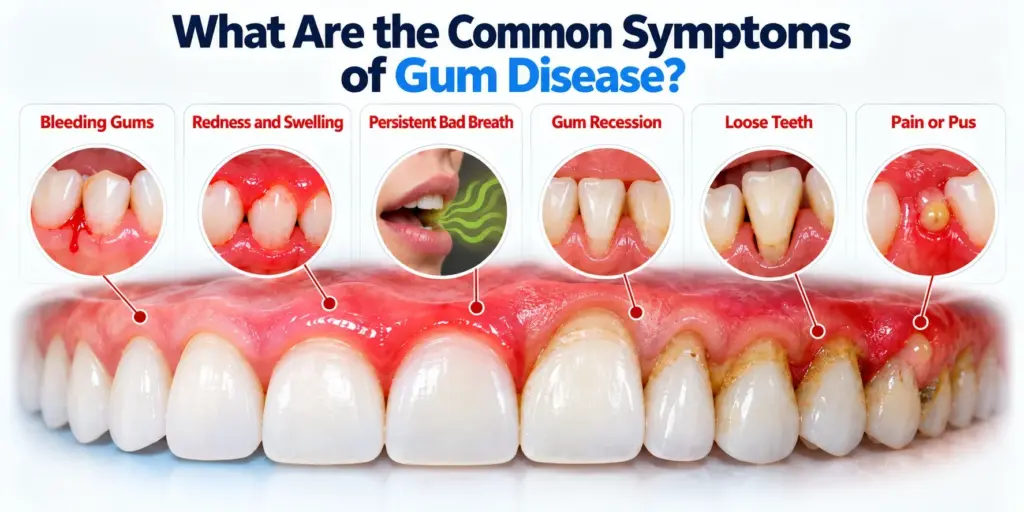
What Are the Common Symptoms of Gum Disease?
Early gum disease often doesn’t hurt, so it’s easy to miss. These are the warning signs to look out for:
- Bleeding Gums: Gums bleed when you brush or floss.
- Redness and Swelling: The gumline looks inflamed or puffy, or it feels tender.
- Persistent Bad Breath: Bacterial buildup gives you bad breath or a taste that won’t go away.
- Gum Recession: Gums pull back from the teeth, making them look longer.
- Loose Teeth: Advanced disease damages the structures that support the teeth.
- Pain or Pus: Pain when chewing or pus near the gums may indicate an infection.
What Causes Gum Disease?
Plaque is the main cause. It’s a sticky film of bacteria that keeps forming on your teeth. When brushing and flossing don’t remove it, plaque can harden into tartar. Only a professional can remove tartar.
Some things raise your risk. Smoking or using tobacco, diabetes, hormonal changes, certain medications that cause dry mouth, and genetic susceptibility all play a part. Inflammation can also worsen when a person doesn’t practice proper oral hygiene or fails to schedule dental visits.
What Are the Different Stages of Gum Disease?
Typically, gum disease progresses from gum inflammation to damage of the underlying tissues and bone. Understanding the stage is crucial to choosing the right treatment.
1. Gingivitis
Gingivitis is the earliest stage. Gums may turn red, swell, and bleed easily. The bone and connective tissue underneath are still fine. With a professional cleaning and better oral hygiene, this stage can usually be reversed.
2. Early Periodontitis
As inflammation spreads, the supporting tissues start to break down. Small spaces may form between teeth and gums. Bacteria accumulate under the gums.
3. Moderate Periodontitis
Damage to the supporting tissues and bone gets worse. The gum pockets deepen. You may notice more bad breath that won’t go away, or more gum recession.
4. Severe Periodontitis
Advanced disease can cause major bone loss, loose teeth, and, in the end, tooth loss. At this stage, treatment aims to control the infection and save the remaining supporting structures.
What Are the Treatment Options for Gum Disease?
Treatment depends on the severity of the disease and the extent of tissue damage. A dentist checks the gums and may measure the gaps between the gums and teeth before recommending a treatment.
Professional Cleaning
For gingivitis, a professional cleaning removes plaque and tartar. To prevent further buildup, brush at least twice a day and floss daily.
Scaling and Root Planing
This deep-cleaning procedure clears plaque and tartar from below the gumline and smooths the tooth roots. It’s commonly used to manage periodontitis.
Advanced Periodontal Treatment
More severe cases may need medication along with other treatments or periodontal surgery. Regular maintenance visits let your dentist monitor your gum health and reduce the chance of the disease coming back.
Conclusion
Bleeding gums, bad breath that won’t go away, and gum recession deserve attention. They aren’t symptoms to just put up with. Getting checked early can prevent more damage. They also help you choose the right treatment before the situation becomes more difficult.
Smile Collective provides customized treatment for gum issues based on your symptoms and your mouth’s needs. If you notice any changes in your gums, inform your dentist. Schedule a gum disease treatment appointment at Smile Collective in Lower Parel, Mumbai.